


The Face
My name is Delano Tjon-A-Njoek, I’m 22 years old and I’m studying Business IT & Management at the University of Applied Sciences Utrecht.
As I have a growing interest in Artificial Intelligence and Machine Learning, I wish to combine these worlds to assist organisations in their decisionmaking to pave the organisations way forward.
In which I also want to develop, is to not only use the AI-/ML-models but to make them aswell.
Curriculum Vitae
Education
HBO-ICT | Business IT & Management | Utrecht University of Applied Sciences (HU)
An educational subject that specialises in teaching development of applications, systems, etc. and how technologies can be implemented in organisations to aid business and technical processes within said organisations.
Within this field are multiple specialisations which can be chosen by the student. One of these is Business IT & Management. This specialisation puts the focus on connecting business problems with technological solutions; how to implement these solutions and how to change organisations to help use these solutions.
HAVO | Economics & Society | Johannes Fontanus College (JFC)
A general curriculum in secondary school which takes five years total in normal-case-scenario’s, where focus has been set in teaching economics in organisations; society and how society has functioned in past and functions in present.
Extra courses: German, Management & Organisation.
Certificates
HAVO | VECON Business School | Johannes Fontanus College (JFC)
When Management & Organisation (now: Business Economics) has been chosen as an extra course, the apprentice is automatically eligible for this certificate. This certificate is proof that the apprentice can handle financial data in organisational estimates, budgets, income and cost statements within various types of organisations. This course is given in the last two years of five years total in HAVO.
Advisory Roles
Advisor
In terms of behavioural phenomena, a coach is by definition an advisor, purely because he/she comes up with strategies on the sidelines to achieve the goal by strategically placing the people/resources that have to make the difference between (in the case of matches) winning and losing.
Coaches motivate the people around them to achieve their goals. They are the mental support for those who are willing to go the extra mile or for those who want to take the step, but don’t want to or can’t at first sight.
Overall, I don’t see myself in this role as a manager, but as an equal. This is also reflected in the colour theory for the personality associated with the colour red, in which the pitfall of “ignoring power” is mentioned. This is certainly a “problem” that has come up unconsciously among employers. In most cases, coaches are also team players, and displaying solo or machobehavior can be experienced as very undesirable. This is definitely an issue that I run into as a person.
Facilitator
One difference between advisor and processfacilitator is that an advisor watches from the sidelines and maintains the process, but the processfacilitator is part of the process.
In most cases, I remain an advisor. But: if it’s a problem bigger than I imagined; that the problem affects me on several levels or that others feel addressed in this way, I become part of the process.

Organisational Culture
Social Culture
Harrison & Handy
As hardships come and go, it’s the people within the organisation who show loyalty not to the organisation, but to the people they work with that make it through.
Without the emotional connection to the people within the organisation, that person is more inclined to leave alongside their skillset, knowledge and experience.
This is why the social needs of employees in my opinion needs to come first.
Family Culture
Quinn
As a result of the previous culture, a family culture is created where emotional connection with one-another is much more present than other cultures.
Where tasks can be delegated and supported by multiple people, where more people will be inclined to help eachother.
“One thought can move pebbles, A likeminded group can move mountains.”
– – – –
Myers-Briggs
March 2024 | Campaigner (ENFP-T) / Mediator (INFP-T)

As my experience in hospitaly unfolds, I grow more extravert and more observant, which can be seen in the graphs. As these workforces have accepted me more as a part of their team, I feel more “at home” and more at ease to be myself. As a result I can express myself which in turn turns me more extraverted.
During my time in hospitality, you learn to “look for work”. which means that there’s always something to do, you just have to find it or it is presented to you. But that last thing still requires you to be observant in your surroundings and be more “in the moment” as opposed to the Intuitive trait which focusses more on hidden meanings. Don’t get me wrong, I still use both sides of this spectrum on a daily basis. But the time spent using these traits has changed.
But the most notable change is the bottom one. This is as a result of the life-education-work-balance I’ve created. I’ve built everything around a certain schedule in which little deviation is possible once it’s running. Per definition have I forced myself to learn using the rudders I have, which in turn promotes the fact that work can go unfinished and may no represent me as a person.
Qualities
Click for more information
Curious
“People with the ENFP personality type (Campaigners) can find beauty and fascination in nearly anything. Imaginative and open-minded, ENFP personalities aren’t afraid to venture beyond their comfort zone in search of new ideas, experiences, and adventures. Moreover, their curiosity extends beyond simply seeking novelty. They also have a deep desire to understand how things work and why they are the way they are.”
Perceptive
“To people with this personality type, no one is unimportant – which might explain how they can pick up on even the subtlest shifts in another person’s mood or expression. Because they’re so sensitive to other people’s feelings and needs, ENFPs can make full use of their caring, considerate nature.”
Enthusiastic
“When something captures their imagination and inspires them, ENFP personalities want to share it with anyone who will listen. And they’re just as eager to hear other people’s ideas and opinions – even if those thoughts are wildly different from their own.”
Excellent Communicators
“People with the ENFP personality type brim with things to say, but they can be caring listeners as well. This gives them a nearly unmatched ability to have positive and enjoyable conversations with all sorts of people – even people who aren’t particularly sociable or agreeable.”
Easygoing
“ENFPs may live for deep, meaningful conversations, but they can also be spontaneous and lighthearted. These personalities know how to find fun and joy in the present moment – and few things give them more pleasure than sharing their joy with others.”
Good-natured and positive
“All of these strengths come together to form a person who is warmhearted and approachable, with an altruistic spirit and a friendly disposition. ENFPs strive to get along with pretty much everyone, and their circles of acquaintances and friends often stretch far and wide.”
Traps
Click for more information
People-Pleasing
“Most people with the ENFP personality type are uncomfortable with the prospect of being disliked. To maintain the peace, they may compromise on things that matter to them or allow others to treat them poorly. And when they fail to win someone over, they might lose sleep trying to figure out what to do about it.”
Unfocused
“The thrill of a new project – especially one that involves collaborating with other people – can bring out the best in these personalities. But ENFPs are known for having ever-evolving interests, meaning that they may find it challenging to maintain discipline and focus over the long term.”
Disorganised
“ENFPs’ focus on the big picture and their love for exploring new ideas and experiences can sometimes overshadow their attention to everyday practical matters. Specifically, people with this personality type may try to avoid the routine tasks that they view as boring like household chores, basic maintenance, or paperwork. The resulting sense of disorganisation can become a major source of stress in their life.”
Overly Accommodating
“ENFP personalities feel called to uplift others, and they may find themselves saying yes whenever anyone asks them for guidance or help. But unless they set boundaries, even the most energetic among them can become overcommitted, with too little time and energy to tackle the necessities of their own life.”
Overly Optimistic
“Optimism can be among this personality type’s key strengths. But ENFPs’ rosy outlook can lead them to make well-intentioned but naive decisions, such as believing people who haven’t earned their trust. This trait can also make it difficult for these personalities to accept hard but necessary truths – and to share those truths with others.”
Restless
“With their positive, upbeat attitude, ENFPs rarely seem upset or dissatisfied on the outside. But their inner idealism can leave them with a nagging feeling that some major areas of their life just aren’t good enough – whether that’s their work, their home life, or their relationships.”
February 2023 | Mediator (INFP-T)

The initial test proved to be relatable in numerous ways. I’ve considered myself an extreme introvert for a very long time. That was untill I joined hospitality in which I grew more extravert.
Because I was so introverted, instead of exploring the world I explored the mind. That may explain that I’m more Intuitive than Realistic. Which sees the balance between seeing more than just meets the eye and seeing exactly what meets the eye.
I’ve learned that to help people may get you further than trying to get as far on your own. This relates to the Thinking-Feeling dimension. As Thinking focusses more on “how” things might help, Feeling focusses more on “who” things might help.
As will be seen in Caluwés Colour Theory, I’m more the personality to not of a plan beforehand. The dimension in Judging-Prospecting can be seen here. In which Judging always speaks in harsh truths and Prospecting focusses on figuring things out while they unfold.
As I explore the mind, things I think about can get pretty drastic. All those scenario’s on what could have gone better, or what I must’ve said that I didn’t say. The mind can be all over the place. These Turbulent minds can be more prone to stress than Assertive minds. This goes alongside that fact that hospitality is and always will be a stressful business.
Qualitites
Click for more information
Empathic
“People with the INFP personality type (Mediators) don’t just care about those around them in an abstract sense – they can actually feel another person’s emotions, from joy and elation to sorrow and regret. Because of their sensitivity, these personalities tend to be thoughtful and kindhearted, and they hate the idea of hurting anyone, even unintentionally.”
Generous
“INFPs rarely enjoy succeeding at others’ expense. They feel called to share the good things in their lives, give credit where it’s due, and uplift the people around them. These personalities want to contribute to a world where every voice is heard and no one’s needs go unmet.”
Open-minded
“Tolerant and accepting, INFPs try not to judge anyone else’s beliefs, lifestyles, or decisions. This is a personality type that prefers compassion to faultfinding. Many feel empathy even for those who have done wrong. Because they’re so accepting, INFPs often become confidants for their friends and loved ones – and occasionally for total strangers.”
Creative
“INFP personalities love to see things from unconventional perspectives. Few things give them more pleasure than allowing their mind to wander through all sorts of ideas and possibilities and daydreams. It’s no wonder, then, that many INFPs are drawn to creative pursuits – or that this personality type is well represented among writers and artists.”
Passionate
“INFPs contain a deep well of passion, primarily driven by their profound empathy, strong internal values, and ceaseless curiosity about the human experience. When an idea or movement captures their imagination, these individuals want to give their whole heart to it. People with the INFP personality type may not always be outspoken, but that doesn’t diminish their strong feelings for a cause that speaks to their beliefs and convictions.”
Idealistic
“INFP personalities strive to follow their conscience even when doing the right thing isn’t easy or convenient. They rarely lose sight of their desire to live a meaningful, purpose-filled life – one that helps others and leaves the world a better place.”
Traps
Click for more information
Unrealistic
“Nothing in this world is perfect – and that can be a difficult truth for INFPs to accept. People with this personality type can be hopeless romantics, with rose-colored visions of what their lives should be like. This can set them up for disappointment when reality inevitably falls short of their dreams.”
Self-Isolating
“INFP personalities long to connect with others, but they don’t always know how. Especially in new environments, they may be reluctant to put themselves out there in ways that would help them make new friends or become involved in a new community. As a result, people with the INFP personality type may sometimes feel lonely or isolated.”
Unfocused
“INFPs’ imaginative, introspective nature doesn’t always lend itself to productivity. Many people with this personality type get frustrated by how difficult they find it to buckle down and get things done. The problem isn’t that they are incapable – rather, it’s that INFPs run into problems when they become so caught up in different ideas and ideals that they fail to commit to a course of action.”
Emotionally Vulnerable
“The emotional attunement of these personalities is among their greatest strengths. But unless they establish boundaries, they can be at risk of absorbing other people’s negative moods or attitudes. And this can be detrimental to their personal peace and productivity, as INFPs are the most likely personality type to say negative emotions get in the way of their ability to think clearly.”
Too Eager to Please
“Conflict tends to be stressful for INFPs, who yearn for harmony and acceptance. When someone dislikes or disapproves of them, these personalities may become fixated on trying to clear the air and change that person’s mind. They might even take responsibility and apologize for things that are not their fault at all in an effort to make sure that they are in everyone’s good graces. Unfortunately, INFPs’ desire to please others can drain their energy, eclipsing their inner wisdom and their awareness of their own needs.”
Self-Critical
“INFPs believe in their unique potential, and they desperately want to live up to it. But this can cause them to have unrealistic expectations for themselves. When these personalities fail to live up to these visions, they may accuse themselves of being useless or selfish or woefully inadequate. Taken too far, this self-criticism can discourage INFPs, leading them to give up on even their dearest dreams.”
Caluwés Colour Theory
March 2024

February 2023
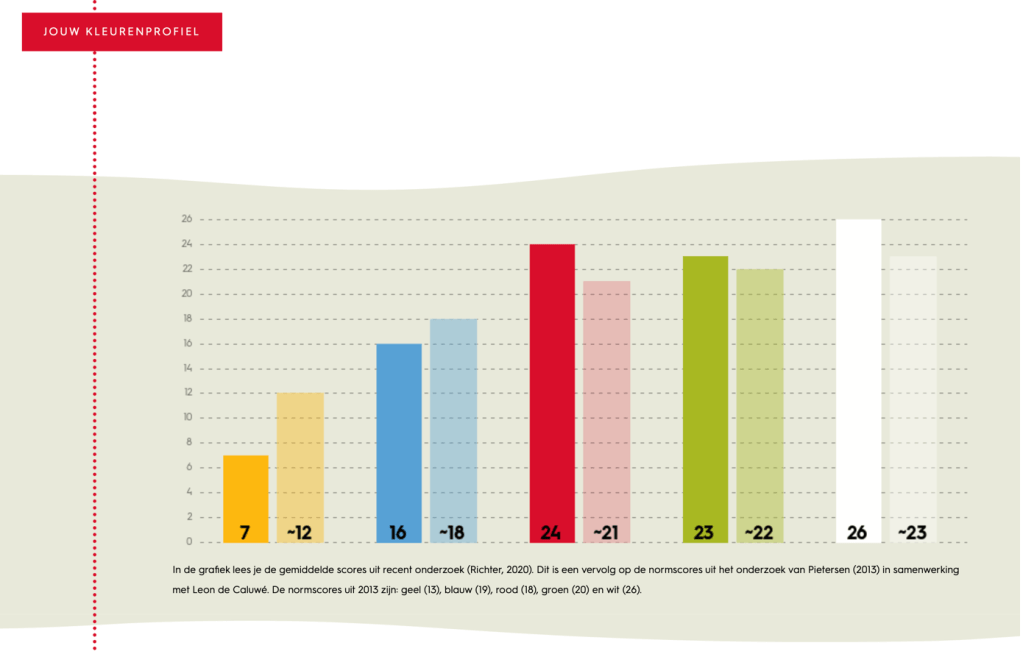
Click for more information
Yellow
Bringing interests together.
- Can bring interests together.
- Can force them to adopt certain positions/opinions.
- Create win-win situations/form coalitions.
- Can show the benefit of certain views Directing noses.
Blue
Structurally forming a clear goal/result.
- Formulate a clear result/goal in advance.
- A good step-by-step plan from A to B.
- Monitors the steps properly and makes adjustments based on them.
- Keeps everything stable and controlled as much as possible Reduces complexity as much as possible.
Red
Stimulating people in the right way.
- Stimulates people in the right way (punishment and baiting).
- Advanced HRM-tools used for rewarding, motivating, status.
- Giving people something back for what they give you.
Green
Making people aware of new point of views/their own shortcomings.
- Makes people aware of new views or of their own shortcomings (consciously incompetent).
- Motivate them to see/learn/be able to do new things.
- Create appropriate joint-learning situations
White
Letting the energy for change come from people themselves.
- Starts from the will and desire and the ‘natural way’ of the human being themselves; adding meaning.
- Remove any blockages for the change to happen “naturally”.
Core Quality Quadrants
During projects in general, there are multiple traps that can make a project fail.
One analogy which can be made in most of these traps, is to use bowling as an example:
in this sport, it is imperative to throw straight or with a mild curve within the edges of the lane to hit the target. If the ball goes to the left or right a little to much, you’ll have a gutterball and therefore won’t hit your target and is the ‘project’ doomed to not succeed.
The subjects mentioned below are the ones I frequently deal with during my projects.
Projectapproach
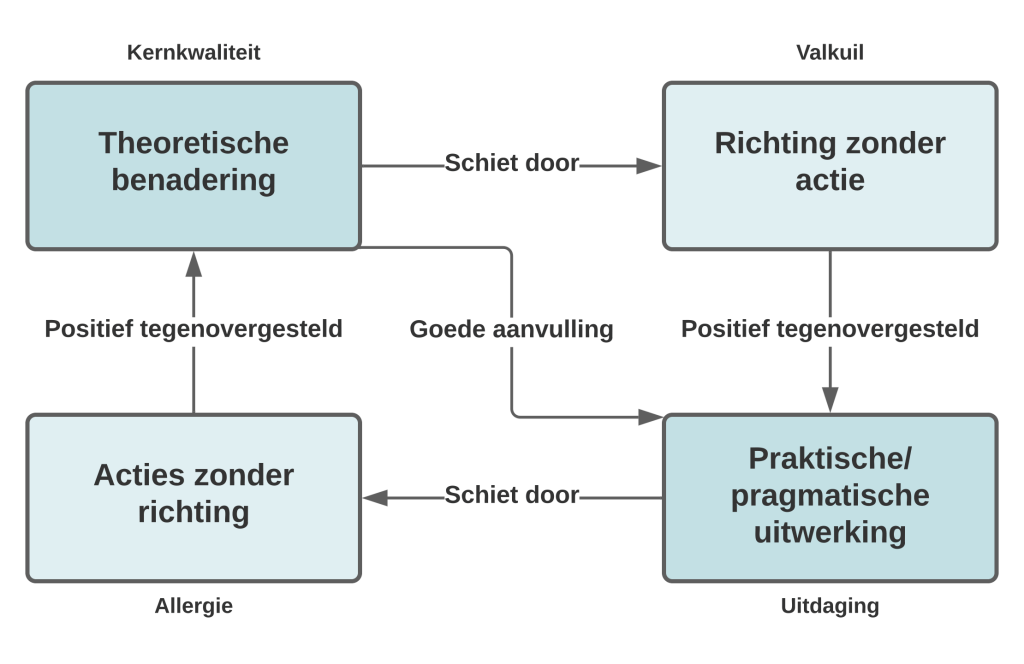
As my side of understanding complex subjects is very strong in certain conditions, I may be stagnated in projects by the fact that the theoretical approach may differ from the pragmatic solution.
By being too theoretical, the danger exists to be too disconnected with the problem at hand which can cause the fact that the initial problem won’t ever be solved.
And by being too pragmatic, the danger exists to be too try-and-error-dependent which can cost unnecessary resources.
In this case, it is needed to be in balance. Both worlds need to compliment eachother to firstly create a theoretical foundation for the pragmatic solution to stand on.
Teambound interaction
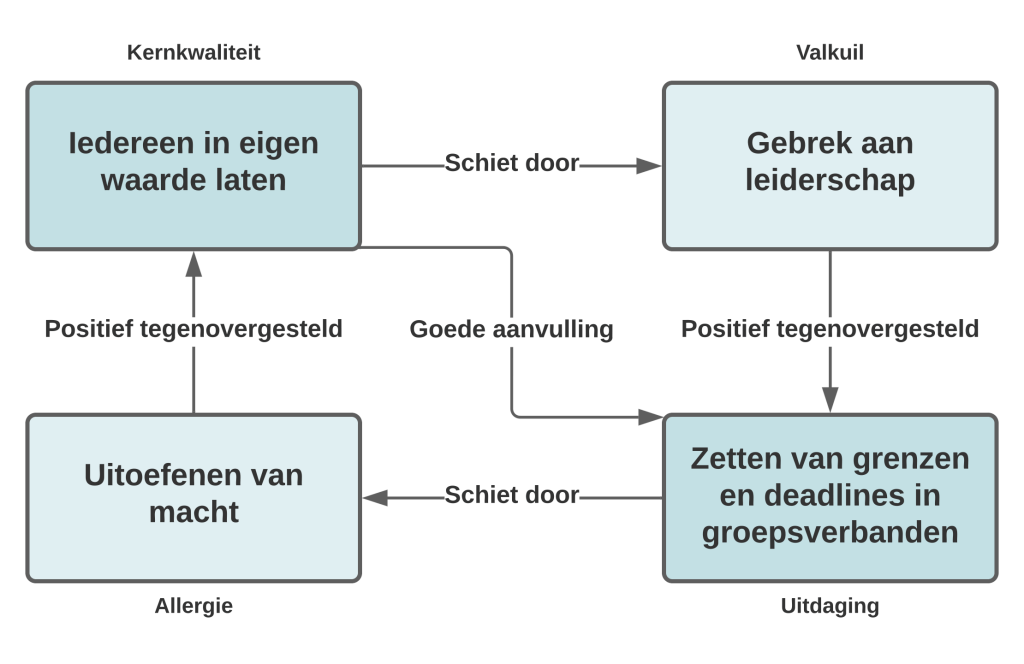
One of my strong points is to be more accepting and tolerant towards others and be more patient with people who need it most in teambound projects en work.
But when something needs to be done within a certain amount of time or before a set-too-close deadline, I am too empathic towards others and do the work of others.
Also instead of claiming that I am the author of said work, I claim that it is the work we all made. I’ve inherited this trait from my years in hospitality where we individually do our part, but we all made it work.
So I must develop the trait to put my name more out there in the work that -I- have authored, instead of letting others claim the honours.
Projectworkflow
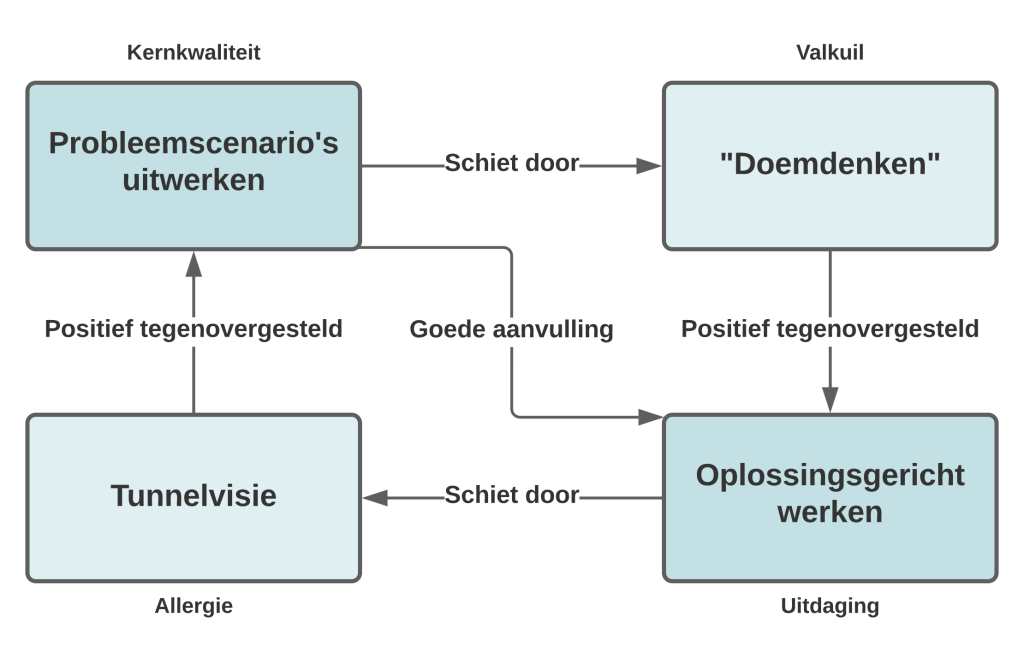
I have a habit of working out scenario’s of conversations whereto it could lead; of activities where other teams have certain types of thinking; of projects which could potentially set said project offcourse.
The fact that these scenario’s aren’t always that positive, it could be considered that these scenario’s could cause downward-spiral-thinking.
In certain scenario’s, it can get as far as not taking action out of fear that it will go wrong.
The key in resolving this, is to use these scenario’s to navigate your way through. Something I have yet to learn.
Double Quadrant

As we build further on “Teambound interaction”, we see that someone who is by definition associated with the colour blue according to Caluwés Colour Theory compliments my quadrant. Although I do know what I need to do to get the project done and how I can acquire the knowledge to do it, I most of the times don’t have a plan or a clear structure to do it within a certain timeframe.
That’s where these type of people come in to aid in this aspect. I can make sure that things work correctly, but I fall into a spiral to perfect it untill the finest edges which can take a considerable amount of time. These people know when to move on with the project and row with the rudders they have.
With these insight I know where to improve my traits, which ones to let go and which ones to acquire.
Nathans Conversation Styles
When the conversation starts about these conversation styles, my preferred method of communication is to move with the ideas of those advised. This is only present when I have little knowledge of the subjects.
When I know that I’m objectively right, I still defend my ideas but I don’t defend it like my life depends on it. In these cases I stand parallel with those advised to present a meaningful discussion.

 The Introverted Consultant